
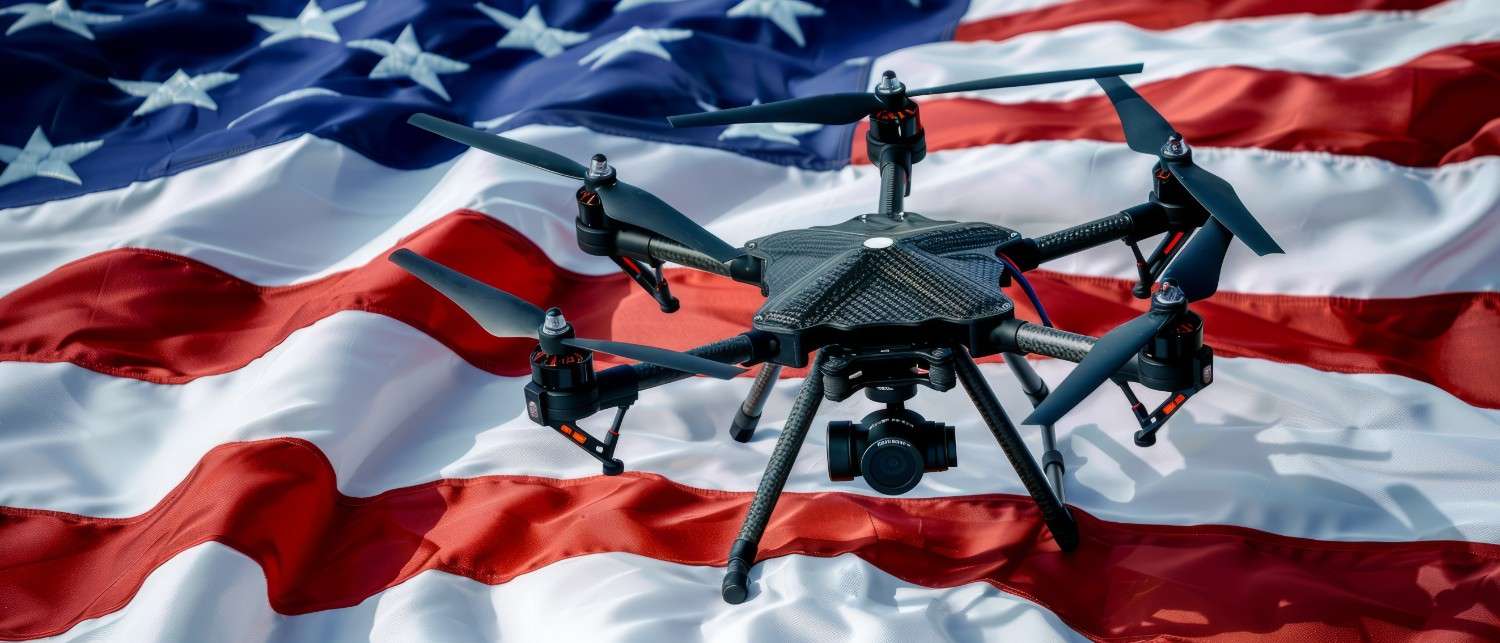
The Federal Communications Commission (FCC) has taken its most decisive step yet in reshaping the U.S. drone market. By adding DJI, Autel Robotics, and other foreign manufacturers to its national security Covered List, the FCC has effectively closed the door on new foreign-made drones and critical components entering the U.S. market. This is not just a regulatory update, it’s a strategic pivot that will redefine procurement, supply chains, and industrial policy for years to come.
From Review to Restriction
For months, overseas drone makers operated in a gray zone of regulatory uncertainty. That era is over. The Covered List now functions as a firewall against future approvals, signaling that Washington has moved beyond audits and reviews to outright restriction. For DJI, the dominant player in the U.S. drone ecosystem, this represents a choke point on both market access and institutional trust.
Global Ripple Effect
The U.S. isn’t acting alone. Other nations are recalibrating their drone policies.
- Australia has restricted Chinese-made drones in defense roles and is funding domestic alternatives.
- Canada is tightening procurement guidance toward trusted vendors.
- Japan is accelerating domestic drone development.
- UK government departments have reduced reliance on DJI for sensitive operations.
- Across the EU, France and Germany are leveraging security concerns to justify industrial strategy, while Eastern European nations lean toward U.S.-style restrictions.
What Does This Mean for the Industry?
The FCC decision is forward-looking, not retroactive. Existing drones remain legal to use and sell, but new foreign-made drones and components cannot receive FCC authorization and without it, they cannot be imported, marketed, or sold in the U.S.
This changes everything:
- The U.S. drone market now splits into legacy fleets (grandfathered, aging out) and future-approved systems (secure, sovereign, FCC-authorizable).
- Every new program must pass a national-security supply-chain test, not just performance or price.
New Regulatory Layer
The FCC’s Public Safety and Homeland Security Bureau has issued a Public Notice implementing two Executive Orders; Restoring American Airspace Sovereignty and Unleashing American Drone Dominance alongside Section 1709 of the FY25 NDAA. According to John Thomas of Pillsbury Law, this update adds foreign-produced UAS and critical components to the Covered List, citing national security risks.
- Broader Scope: Unlike prior actions targeting specific companies, this update applies to entire categories of foreign-produced UAS and components, marking a shift toward origin-based controls.
- Immediate Impact: Covered equipment is now ineligible for FCC authorization, affecting manufacturers, importers, and critical-infrastructure operators.
- Congressional Mandate: Section 1709 of the NDAA drove this action, underscoring how national security legislation is shaping technology regulation.
This signals heightened scrutiny for UAS supply chains and reinforces the intersection of national security and FCC authority.
The Real Choke Point: Components
This isn’t only about complete drones. The FCC explicitly includes critical UAS components—motors, motor controllers, RF modules, power electronics, navigation subsystems. A drone assembled in the U.S. can still be blocked if its propulsion or control electronics are foreign-made. This forces deep supplier audits, full bill-of-material transparency, and true domestic or allied manufacturing—not “final assembly” loopholes.
Defense and Infrastructure Buyers Gain Clarity
For Department of War (DoW), Department of Homeland Security (DHS), utilities, and public safety agencies, procurement risk just collapsed. FCC approval now equals baseline national security acceptability. Expect faster down-selects, shorter RFP cycles, and fewer exceptions or waivers.
Foreign OEMs Face Hard Choices
Non-U.S. manufacturers now have three unattractive options:
- Exit the U.S. market.
- Freeze U.S.-specific innovation.
- Re-architect supply chains inside the U.S. or allied nations—a slow, expensive, and IP-sensitive process many won’t pursue.
Industrial Policy in Action
The FCC’s language is clear: reliance on foreign UAS “unacceptably undermines the U.S. drone industrial base.” This is about more than security. It’s about protecting U.S. manufacturing scale-up, encouraging capital investment, and rewarding vertically integrated propulsion, power, and control stacks. The industry is moving from prototype culture to production culture. Check out our blog Inside America’s Plan to Transform Warfare, Unleashing Drone Dominance where we discuss the US shift toward drone dominance.
Bottom Line
This is the clearest buy signal the U.S. government has ever sent to the drone industry. The future U.S. drone market will be:
- Secure
- Sovereign
- FCC-authorizable
- Supply-chain transparent
Performance and price alone are no longer enough. Manufacturing location and component origin now decide market access.
Share:
Drones and the Future of Beyond Visual Line of Sight (BVLOS): Unlocking the Real Potential of Uncrewed Flight
Bridging the Gulf: Uncrewed Innovation and Sovereign Capability in Focus