
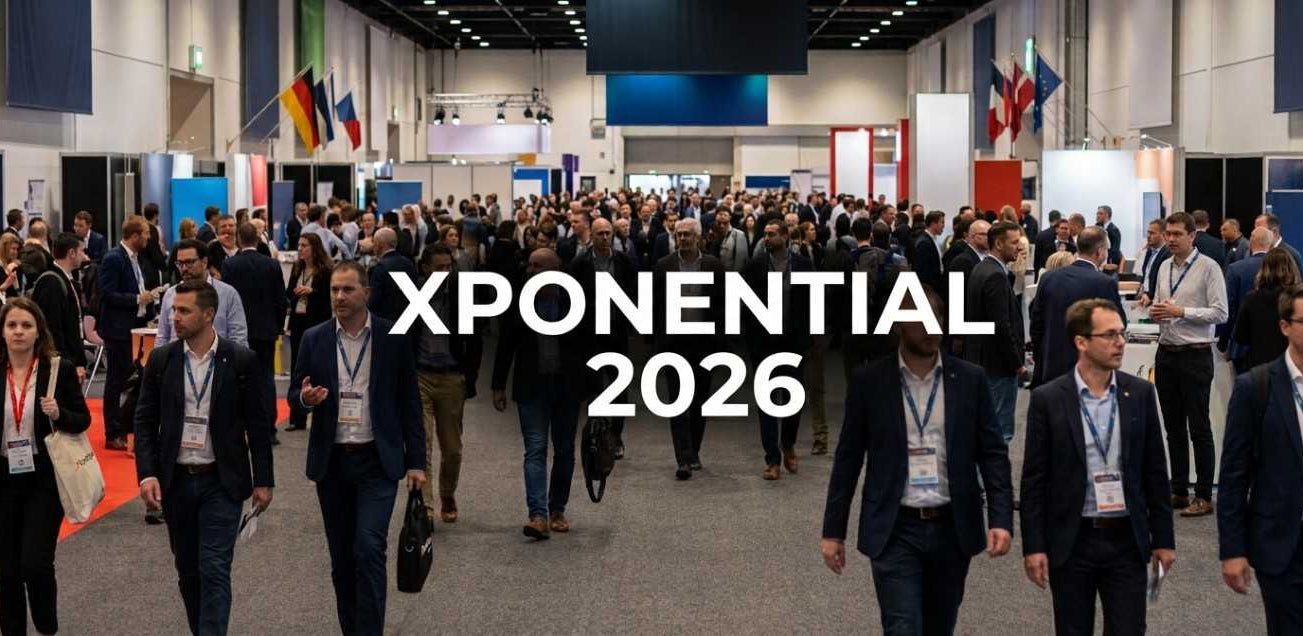
XPONENTIAL 2026 in Detroit markiert einen klaren Wendepunkt für die Branche der autonomen Systeme.
Die diesjährige Veranstaltung unterscheidet sich wesentlich von früheren Ausgaben. Die Diskussion geht über die Frage hinaus, ob Autonomie funktioniert oder ob überzeugende Prototypen gebaut werden können. Diese Fragen wurden weitgehend beantwortet.
Die Branche konzentriert sich nun auf eine Reihe neuer Herausforderungen: Industrialisierung, Produktionsbereitschaft, Systemintegration und die Fähigkeit zur Bereitstellung in großem Maßstab.
Detroit mit seiner langen Tradition in den Bereichen Fertigung, Lieferketten und Mobilitätstechnik war ein bewusster und passender Hintergrund. Die Botschaft der gesamten Veranstaltung war konsistent. Autonome Systeme gehen über das Experimentieren hinaus und werden zunehmend in der realen Welt eingesetzt.

US-A-Team bei XPONENTIAL 2026 in Detroit: von links nach rechts: Alby King – Technischer Support in den USA, Dean Marcarelli – Chief Commercialization Officer, Nick Grewal – Gründer, Vorsitzender und CEO, Jesse Hester – US-Vertrieb, Luke Benoit – US-Verkäufe
Der wichtigste Wandel: die Industrialisierung
Die deutlichste Erkenntnis aus XPONENTIAL 2026 ist, dass die Branche von der Prototypenentwicklung zu Produktionssystemen übergeht.
Dieser Wandel war bei Ausstellern, Produkteinführungen, Keynote-Messaging und Anlegerpositionierung sichtbar. Die schwierigsten Probleme sind nicht mehr Flugsteuerungs-, Navigations- oder Autonomiealgorithmen. Stattdessen hat sich der Schwerpunkt auf Skalierung, Fertigung, Zuverlässigkeit, Stromversorgungssysteme und langfristige Betriebssicherheit verlagert.
Dieser Wandel deckt sich eng mit dem, was wir in unseren eigenen Märkten beobachten. Kunden sind zunehmend weniger an eigenständigen Komponenten interessiert und konzentrieren sich mehr auf einsetzbare Systeme, die in anspruchsvollen Betriebsumgebungen eine konsistente Leistung erbringen können.
Die Verteidigung steht jetzt im Mittelpunkt
Die Verteidigungspräsenz bei XPONENTIAL hat sich deutlich ausgeweitet. Themen wie einsatzbereite Systeme, umkämpfte Umgebungen, belastbare Kommunikation und souveräne Fertigung standen während der gesamten Veranstaltung im Vordergrund.
Dies spiegelt eine umfassendere globale Realität wider. Autonome Systeme werden nicht mehr nur als kommerzielle Technologien betrachtet. Sie werden zunehmend als strategische Infrastruktur mit direkten Auswirkungen auf die nationale Leistungsfähigkeit und Sicherheit angesehen.
Infolgedessen werden Anforderungen an vertrauenswürdige Lieferketten, inländische Produktion und Systemstabilität eher zum Standard als zur Option. Dieselben Anforderungen prägen zunehmend auch die gewerbliche Beschaffung.
Integration ersetzt Komponenten
Einer der wichtigsten strukturellen Veränderungen, die auf der XPONENTIAL 2026 sichtbar sind, ist die Abkehr von eigenständigen Komponenten hin zu integrierten Architekturen.
Bei Antriebs-, Navigations-, Kommunikations- und Computersystemen suchen Kunden nicht mehr nach Einzelteilen. Sie suchen nach validierten, interoperablen Systemen, die produktionsbereit und einfach bereitzustellen sind.
Dies ist ein Bereich, in dem sich die Branche rasant weiterentwickelt. Bei ePropelled sehen wir eine wachsende Nachfrage nach integrierten Antriebs- und Energiesystemen anstelle einzelner Motoren und Steuerungen, was einen umfassenderen Bedarf an Reduzierung der Komplexität, Verbesserung der Zuverlässigkeit und Beschleunigung der Plattformentwicklung widerspiegelt.
Macht und Energie werden strategisch
Energiesysteme bildeten während der gesamten Veranstaltung ein zentrales Thema. In einer wachsenden Zahl von Ankündigungen und Diskussionen wurde hervorgehoben, dass Batterien, Antrieb und Leistungselektronik zum Kern der Systemleistung und nicht mehr zu unterstützenden Elementen werden.
Leistungsvorteile werden zunehmend durch Energiemanagement, Ausdaueroptimierung, thermische Kontrolle und integrierte Antriebsarchitekturen vorangetrieben. Dies bedeutet eine Abkehr von der traditionellen Konzentration auf Flugzeugzellen oder Software allein.
Dieser Trend ist besonders bei Hochleistungsanwendungen wie landwirtschaftlichen UAVs sichtbar, bei denen Nutzlast, Ausdauer und Betriebseffizienz eng mit der effektiven Energieverwaltung auf Systemebene verknüpft sind.
Resilienz ist mittlerweile eine Grundvoraussetzung
Ein weiterer klarer Trend ist die Betonung robuster Navigation und Kommunikation. Technologien, die für beeinträchtigte GNSS-Umgebungen, autonome Netzwerkumschaltung und Langstreckenoperationen entwickelt wurden, wurden ausführlich vorgestellt.
Zukünftige autonome Systeme werden mit Blick auf umkämpfte und unvorhersehbare Umgebungen entwickelt. Belastbare Konnektivität, Multinetzwerkfähigkeit und robuste Positionierung werden zu Grundvoraussetzungen für die Bereitstellung.
Produktionsmaßstab als Wettbewerbsvorteil
Die vielleicht wichtigste Schlussfolgerung aus XPONENTIAL 2026 ist, dass die Fertigungskapazität selbst mittlerweile ein entscheidendes Unterscheidungsmerkmal ist.
Die Branche tritt in eine Phase ein, in der die Fähigkeit, Systeme in großem Maßstab zu produzieren, zu liefern und zu unterstützen, den Wettbewerbsvorteil ausmacht. Fragen rund um die Massenproduktion, die Sicherheit der Lieferkette und die langfristige Nachhaltigkeit stehen heute im Mittelpunkt der Entscheidungsfindung der Kunden.
Dies ist ein Bereich, in dem Unternehmen zunehmend nicht nur nach Innovation beurteilt werden, sondern auch nach ihrer Fähigkeit, diese Innovation zu industrialisieren, ein Bereich, den Detroit selbst symbolisiert.
Ein entscheidender Moment für die Branche
XPONENTIAL 2026 signalisiert, dass die Branche der autonomen Systeme in eine neue Phase eintritt, die von Industrialisierung, Integration und betrieblichem Einsatz geprägt ist.
Die UGV- und Marine-Unmanned-Systeme sind endlich erwachsen geworden, da zahlreiche Unternehmen Bodenfahrzeuge und Marinefahrzeuge ausstellen.
Es ist unwahrscheinlich, dass die Unternehmen, die in dieser nächsten Phase erfolgreich sind, diejenigen sind, die allein über die fortschrittlichsten Prototypen verfügen. Stattdessen wird sich Führung durch die Fähigkeit auszeichnen, zuverlässig zu produzieren, intelligent zu integrieren, Energie effizient zu verwalten und Kunden in großem Maßstab zu unterstützen.
Aus unserer Sicht verändert dies bereits die Art und Weise, wie Systeme sowohl im kommerziellen als auch im Verteidigungsmarkt entworfen, spezifiziert und eingesetzt werden.
Dieser Moment fühlt sich wie ein klarer Übergangspunkt an.
Die Branche bewegt sich entschieden vom Experimentieren zum industriellen Einsatz, und dieser Wandel ist bereits heute in der Art und Weise sichtbar, wie Systeme entworfen und bereitgestellt werden. Der Trend hin zu integriertem Antrieb, intelligentem Energiemanagement und produktionsbereiten Architekturen ist nicht theoretisch, er findet bereits statt, insbesondere in wachstumsstarken Segmenten wie landwirtschaftlichen UAVs.
Die Unternehmen, die in dieser nächsten Phase erfolgreich sein werden, werden diejenigen sein, die Innovationen in einsetzbare, skalierbare Systeme umsetzen können. Hier wird in den nächsten Jahren der eigentliche Wettbewerbsvorteil definiert.
Biografie des Autors

Autor: Nick Grewal, Gründer, Vorsitzender und CEO, ePropelled
Nick Grewal, Gründer, Vorsitzender und CEO von ePropelled, leitet das Unternehmen seit seiner Gründung im Mai 2018 und treibt die Entwicklung fortschrittlicher Elektroantriebe und intelligenter Energiesysteme für Luft-, Land- und Schiffsanwendungen voran. Mit einem Hintergrund, der die Computerindustrie und das Finanzwesen umfasst, hat er zum Wachstum und Erfolg von mehr als 40 High-Tech-Unternehmen beigetragen. Bei ePropelled konzentriert sich Nick auf die Skalierung innovativer Antriebstechnologien in serienreife Lösungen und unterstützt den Übergang unbemannter und autonomer Systeme vom Konzept zum industriellen Einsatz.
Teilen:
Warum wächst die Nachfrage nach unbemannten Bodenfahrzeugen so schnell?
Wie arbeiten autonome Luft- und Bodensysteme zusammen, um effektive Lösungen in der Landwirtschaft bereitzustellen?